Without a gallbladder, bile works differently.
Your gallbladder used to store bile and release a concentrated burst when you ate fat. After it is removed, bile drips into your intestine more continuously instead.
That is why large or high-fat meals, fried foods, and very rich dishes often cause the most trouble in the first weeks and months, even foods that felt fine before surgery. It is not in your head, and it is not that you are doing something wrong.
Most people settle over several weeks to a few months, but everyone's triggers and timeline are different, which is exactly why tracking your own reactions beats following a generic list.
Can I eat this after surgery?
Why did that meal upset me?
Is this packaged food too high in fat?
Which option is easier on my digestion?
Scores that account for life without a gallbladder.
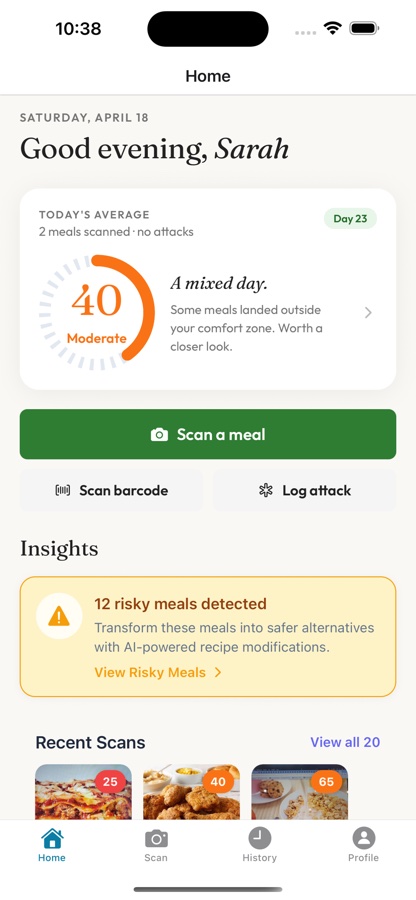
When you tell GallDiet you no longer have a gallbladder, it factors that in when scoring foods, because meals can affect digestion differently after removal.
Scan a meal or packaged food for a 0-100 score, log how it actually sat with you, and let the app surface your own patterns over time, so you stop guessing from a one-size-fits-all list.
Post-op aware scoring
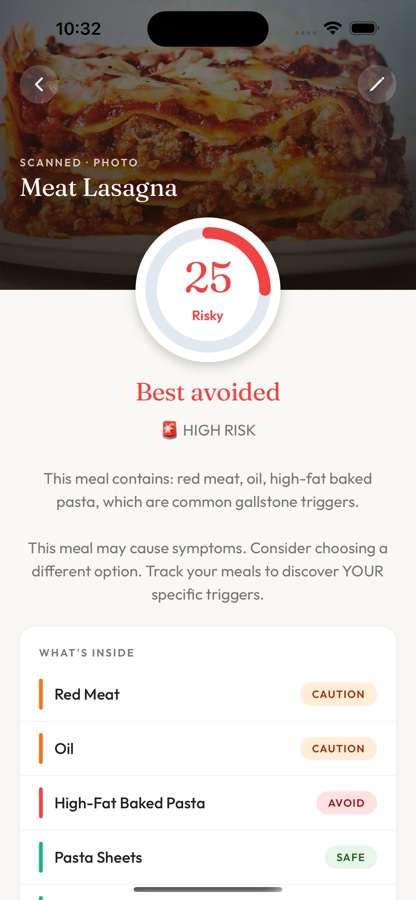
Foods are scored with your gallbladder status in mind, so the guidance fits life after surgery rather than a generic diet.
Check foods before you eat or buy
Scan barcodes while shopping or photograph a meal to spot high-fat and rich foods that are harder on digestion now.
Find your own triggers
Log how meals sit with you and mark personal triggers, so the app flags them for you, even when they hide in ingredients.
Medical context: public guidance from the NIDDK emphasizes a healthy eating plan, fiber-rich foods, fewer refined carbohydrates and sugar, healthy fats in appropriate amounts, and avoiding unhealthy fats often found in fried foods and desserts. GallDiet helps you apply food guidance to day-to-day choices; it does not replace advice from your clinician.
GallDiet scans for ingredients and food signals worth checking.
A scanner cannot promise that a food will be safe. What it can do is slow the decision down and surface common signals that are easy to miss.
GallDiet looks for patterns such as fried preparation, oils, butter, cream, full-fat dairy, fatty meats, heavy sauces, rich desserts, high-fat packaged foods, and ingredients that match your personal triggers.
Check the food, review the ingredients, and save the decision.
GallDiet is designed for quick food decisions, but it also helps you keep a record of what you checked, what you ate, and what seemed to affect you over time.
Scan before eating, while shopping, and when comparing options.
Scan meals before eating
If you are unsure about a meal, scan it before eating. GallDiet can help identify ingredients worth paying attention to, such as fried foods, heavy sauces, dairy, oils, butter, and other common gallbladder-related trigger signals.
Scan packaged foods while shopping
Check protein shakes, yogurts, frozen meals, snacks, salad dressings, sauces, soups, cereals, and other packaged foods before buying instead of relying only on front-of-package claims like "healthy," "light," or "low calorie."
Compare foods before buying
Two yogurts, sauces, dressings, or frozen meals can look similar but contain very different ingredients. GallDiet helps you compare possible risk factors before choosing.
Check restaurant and takeout meals
Restaurant and takeout meals can include butter, oil, cream, cheese, fried ingredients, or heavy sauces even when they do not look obviously greasy. GallDiet can help you think through possible risk factors before deciding.
Track symptoms and possible triggers
After a gallbladder attack, it can be hard to remember exactly what you ate. GallDiet lets you log meals, symptoms, attacks, notes, and possible triggers so you can build a clearer food history over time.
Use GallDiet after gallbladder removal
Some people continue to track food tolerance after gallbladder removal. GallDiet can help you log meals, symptoms, notes, and patterns while you follow your doctor's or surgeon's guidance after surgery.
A scanner is more useful when it remembers what happened next.
Food tolerance can be personal. GallDiet helps you build a saved history of scans, symptoms, notes, triggers, and outcomes so each food decision can add context for the next one.
Meals you scanned Packaged foods you checked Ingredients that appeared risky Foods you marked as triggers Symptoms or attacks you logged Notes about how you felt after eating Safer meals or recipe changes you tried
For food decisions that usually turn into repeated searches.
GallDiet gives you a place to scan, check, log, and compare instead of repeating the same search every time a new food comes up.
Scan meals and packaged foods for a post-op aware score instead of guessing from a generic safe-foods list.
Log how meals sit with you so GallDiet can help surface the foods that seem to be your own triggers.
Use the barcode scanner while shopping to check products before buying, rather than trusting front-of-pack claims.
Scan and compare two foods to see which carries fewer of the signals that tend to be harder after surgery.
See the Gallbladder Food Scanner page, or the Gallbladder Diet App guide for a wider overview.
A tracking tool to use alongside professional care.
GallDiet does not diagnose, treat, prevent, or cure gallbladder disease or any medical condition.
The app is designed to support food tracking, ingredient awareness, and personal pattern recognition. It should be used alongside advice from qualified healthcare professionals.
If you are having severe pain, fever, vomiting, jaundice, chest pain, or symptoms that feel urgent, seek medical care immediately.
Common questions about diet after gallbladder removal.
What can I eat after gallbladder removal?
After gallbladder removal (cholecystectomy), many people start with lighter, lower-fat foods and gradually reintroduce other foods as tolerated. Common early choices include lean proteins, cooked vegetables, whole grains, and low-fat dairy. Tolerance varies from person to person, so the useful approach is to reintroduce foods gradually and track how each one sits with you. Always follow your surgeon or dietitian's specific advice.
Why do some foods bother me more after gallbladder surgery?
Without a gallbladder, your body no longer stores bile and releases it in a concentrated burst when you eat. Instead, bile drips into the intestine more continuously, which can make large or high-fat meals harder to digest, especially in the first weeks and months. This is why fatty, fried, or very rich meals often cause the most trouble after surgery.
How long does it take to adjust after gallbladder removal?
Many people find that digestion settles over several weeks to a few months as the body adapts. Some can eventually eat a fairly normal diet, while others keep noticing certain trigger foods long term. Because the timeline and triggers differ for everyone, tracking your own foods and symptoms is one of the most practical ways to learn what works for you.
What foods should I avoid after gallbladder removal?
Foods most commonly reported as difficult after surgery include fried foods, fatty or greasy meals, full-fat dairy, creamy or buttery sauces, fatty cuts of meat, and very rich desserts. Large meals and high-fat meals tend to be harder than smaller, lighter ones. These are general patterns, not a personal list, which is exactly why tracking your own reactions matters.
Can GallDiet help after gallbladder removal?
Yes. GallDiet is built to help post-op. You scan a meal or packaged food, it gives a 0-100 score that accounts for life without a gallbladder, and it lets you log how foods sit with you so you can spot your own triggers over time instead of guessing from a generic list.
Does GallDiet adjust its scoring for people without a gallbladder?
Yes. GallDiet accounts for whether you still have your gallbladder when it scores foods, because foods can affect digestion differently after removal. You can also mark your own personal triggers so the app flags them for you, even when they are hidden in ingredients.
Is GallDiet medical advice?
No. GallDiet is not medical advice and does not replace your surgeon, doctor, or dietitian. It is a food tracking and decision-support tool to use alongside your care team's guidance as you recover and adjust after surgery.
Download GallDiet and scan your next food decision.
Start with one barcode, one meal photo, or one manual food check. Your personal gallbladder food history builds from there.