A gallbladder diet is hard when every meal feels uncertain.
Generic advice like "eat low fat" can help, and meal plans can be useful. But in real life, the hard question is usually more immediate.
GallDiet was built for those real-world food decisions: checking a specific meal, packaged food, sauce, snack, yogurt, protein shake, restaurant option, or recipe before you decide what to eat.
It is not medical advice and does not replace your doctor, surgeon, or dietitian. The goal is to reduce some of the guessing around food and make it easier to keep track of what seems to work for your body.
Can I eat this specific meal?
Should I buy this packaged food?
Is this sauce, snack, yogurt, protein shake, or restaurant option risky for me?
What did I eat before my last symptoms?
Built for actual meals, products, recipes, and restaurant choices.
Many gallbladder diet resources give general food lists, low-fat meal ideas, or meal planning guidance. Those can be helpful, but real-life food decisions are often more specific.
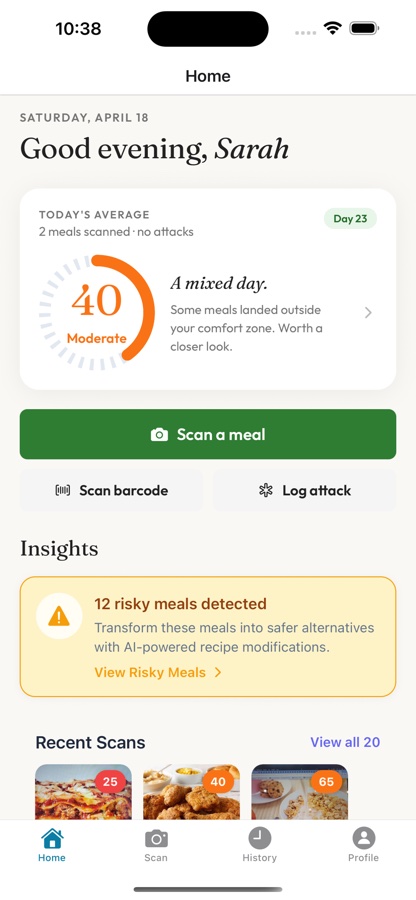
GallDiet is designed for the moment when you are looking at an actual food and wondering whether it might work for you. Instead of only reading a general list, you can scan a food, check possible risky ingredients, add your own known triggers, and save your food history over time.
Scan foods and barcodes
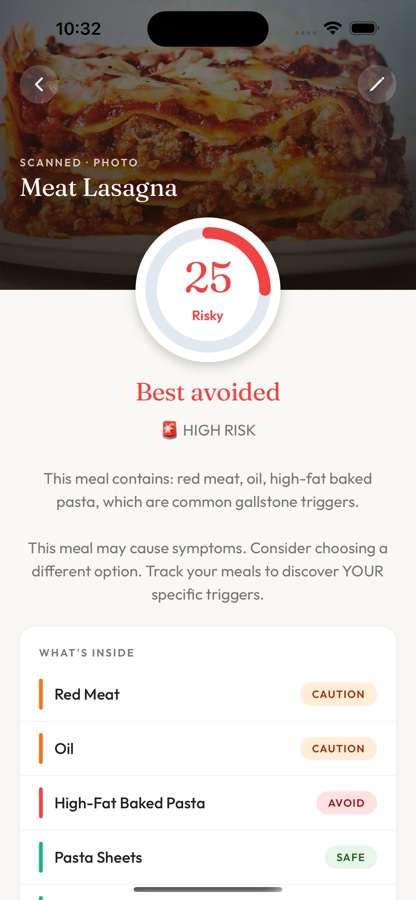
Take a photo of a meal, scan a packaged-food barcode, or enter a meal manually to get a gallbladder-focused safety score.
Check possible risky ingredients
See common gallbladder-related signals such as fried preparation, butter, oils, full-fat dairy, fatty meats, and rich sauces.
Track symptoms and attacks
Log meals, notes, symptoms, gallbladder attacks, and outcomes so your food history becomes easier to review.
Medical context: public guidance from the NIDDK emphasizes a healthy eating plan, fiber-rich foods, fewer refined carbohydrates and sugar, healthy fats in appropriate amounts, and avoiding unhealthy fats often found in fried foods and desserts. GallDiet helps you apply food guidance to day-to-day choices; it does not replace advice from your clinician.
A meal may look harmless and still hide ingredients worth checking.
Many people with gallbladder issues are told to avoid fatty, fried, greasy, or rich foods. But everyday food is rarely that simple.
Triggers can also vary from person to person. One person may struggle with dairy, while another may react more strongly to fried food, chocolate, sauces, or larger portions of fat. That is why personal tracking can be useful.
Scan, check, log, and learn from your own food history.
GallDiet does not tell you with certainty what will or will not trigger symptoms. It helps you reduce guessing, notice possible risk factors, and track your own patterns over time.
Before eating, while shopping, after symptoms, and after surgery.
Use GallDiet before eating
If you are unsure about a meal, scan it before eating. GallDiet can help identify ingredients worth paying attention to, such as fried foods, heavy sauces, dairy, oils, butter, and other common gallbladder-related trigger signals.
Use GallDiet while grocery shopping
Check protein shakes, yogurts, frozen meals, snacks, salad dressings, sauces, soups, cereals, and other packaged foods before buying instead of relying only on front-of-package claims like "healthy," "light," or "low calorie."
Use GallDiet when eating out
Restaurant and takeout meals can include butter, oil, cream, cheese, fried ingredients, or heavy sauces even when they do not look obviously greasy. GallDiet can help you think through possible risk factors before deciding.
Use GallDiet after an attack
After a gallbladder attack, it can be hard to remember exactly what you ate. GallDiet lets you log meals, symptoms, attacks, notes, and possible triggers so you can build a clearer food history over time.
Use GallDiet after gallbladder removal
Some people continue to track food tolerance after gallbladder removal. GallDiet can help you log meals, symptoms, notes, and patterns while you follow your doctor's or surgeon's guidance after surgery.
Build a personal food history
Generic food lists can help you get started, but your own history can show which meals, ingredients, portions, or patterns seem easier or harder for your body.
Keep the evidence from your own meals in one place.
Over time, GallDiet helps you move from one-off searches to a saved history of the foods you checked, the symptoms you logged, and the meals you chose to eat or avoid.
Meals you scanned Packaged foods you checked Ingredients that appeared risky Foods you marked as triggers Symptoms or attacks you logged Notes about how you felt after eating Safer meals or recipe changes you tried
For the food decisions that usually send people to Google.
GallDiet gives you a place to check, log, and compare instead of repeating the same search every time a new food comes up.
Scan the specific food and see whether it contains common trigger signals, instead of relying only on a generic avoid list.
Use the barcode scanner first. When product data is missing, take a clear photo of the ingredient label.
Use GallDiet as a food tolerance tracker after gallbladder removal while following your care team's guidance.
Log attacks and recent meals so you can review possible patterns with more context.
Read the Gallbladder Food Scanner guide for barcode, photo, packaged-food, and ingredient-checking workflows.
A tracking tool to use alongside professional care.
GallDiet does not diagnose, treat, prevent, or cure gallbladder disease or any medical condition.
The app is designed to support food tracking, ingredient awareness, and personal pattern recognition. It should be used alongside advice from qualified healthcare professionals.
If you are having severe pain, fever, vomiting, jaundice, chest pain, or symptoms that feel urgent, seek medical care immediately.
Common questions about using a gallbladder diet app.
What is a gallbladder diet app?
A gallbladder diet app is a tool that helps people track meals, symptoms, possible triggers, and food decisions related to gallbladder issues. GallDiet also lets users scan meals and packaged foods to identify possible risky ingredients and build a personal food history over time.
How is GallDiet different from a gallbladder meal plan?
A meal plan usually gives general meal ideas or low-fat food suggestions. GallDiet is designed for real-time food decisions: you can scan meals, check packaged foods, compare options, log symptoms, add triggers, and track your own patterns over time.
Can GallDiet tell me exactly what foods are safe?
No. GallDiet cannot guarantee that a food is safe or unsafe for you. Gallbladder triggers can vary from person to person. The app helps flag possible risk factors and track your own food history so you can make more informed decisions.
Can I use GallDiet if I still have my gallbladder?
Yes. GallDiet can be used by people managing gallstones, gallbladder attacks, or food uncertainty while they follow medical advice or wait for surgery.
Can I use GallDiet after gallbladder removal?
Yes. Some people still want to track food tolerance after gallbladder removal. GallDiet can help you log meals, symptoms, notes, and possible triggers after surgery, but you should always follow guidance from your doctor or surgeon.
Can GallDiet scan packaged foods?
Yes. GallDiet can scan barcodes and help assess packaged foods depending on the available product and ingredient data. You can also take photos of packaged foods, ingredient labels, meals, and recipes.
Can I use GallDiet while grocery shopping?
Yes. Grocery shopping is one of the main use cases for GallDiet. You can use it to check protein shakes, yogurts, sauces, snacks, frozen meals, salad dressings, soups, and other packaged foods before buying.
Can I use GallDiet for restaurant meals?
Yes. You can use GallDiet to assess restaurant meals, takeout, and menu items. The app can help you think through possible risk factors like fried ingredients, butter, cream, cheese, oils, and heavy sauces.
Does GallDiet replace a doctor or dietitian?
No. GallDiet is not medical advice and does not replace professional care. Always follow guidance from your doctor, surgeon, or dietitian.
Download GallDiet and make your next food decision easier.
Start with one scan, one meal, or one symptom log. Your personal gallbladder food history builds from there.